
Precise RH control
Humidity sensor and automation support help keep the target range more stable.
Ultrasonic humidifiers generate very fine water particles for balanced relative-humidity control in production areas, warehouses, greenhouses, textile facilities, printing rooms and sensitive process environments. Single or dual outlet options, smart control panel and mobile body design make the system easy to adapt to the project.
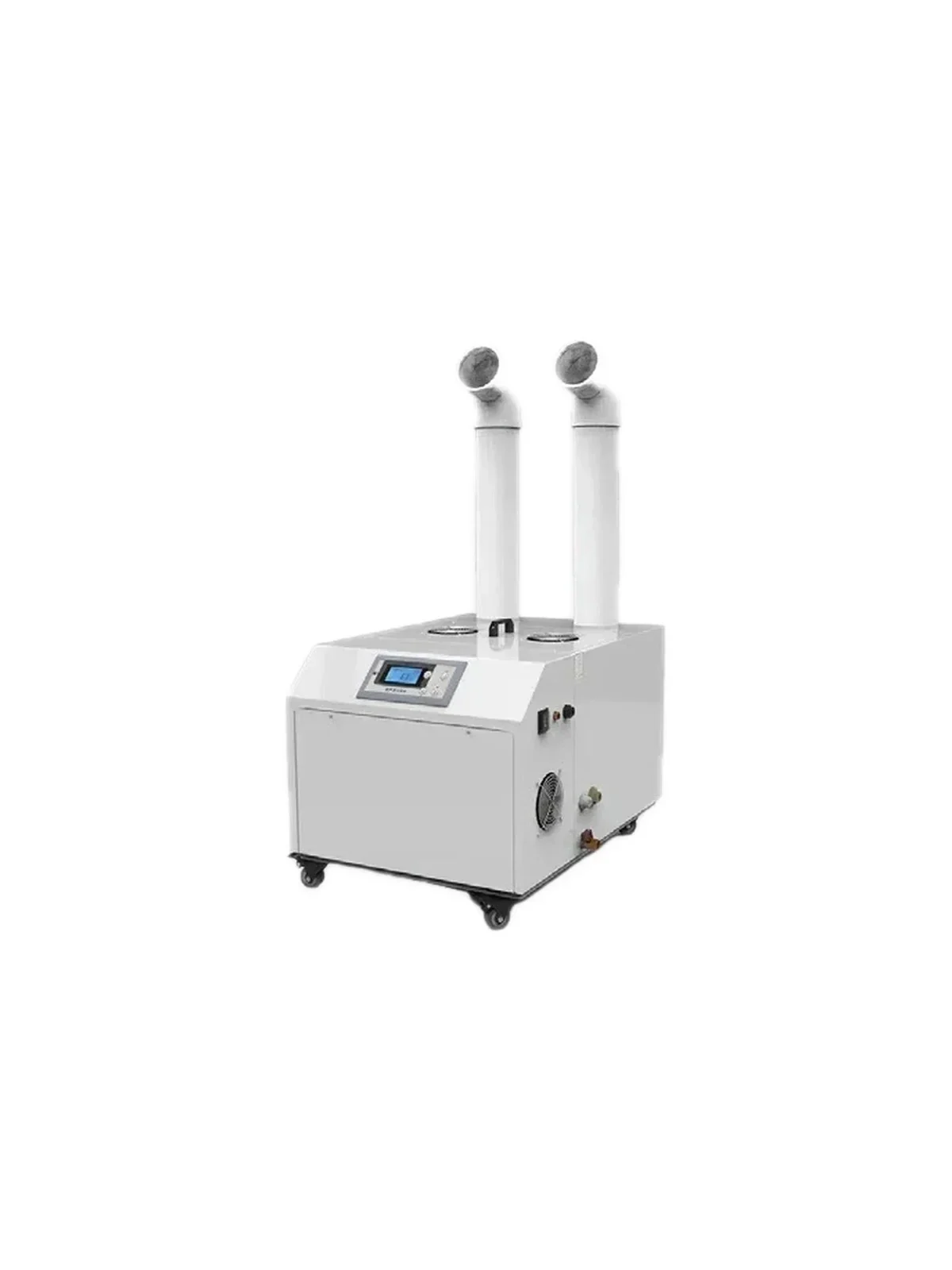
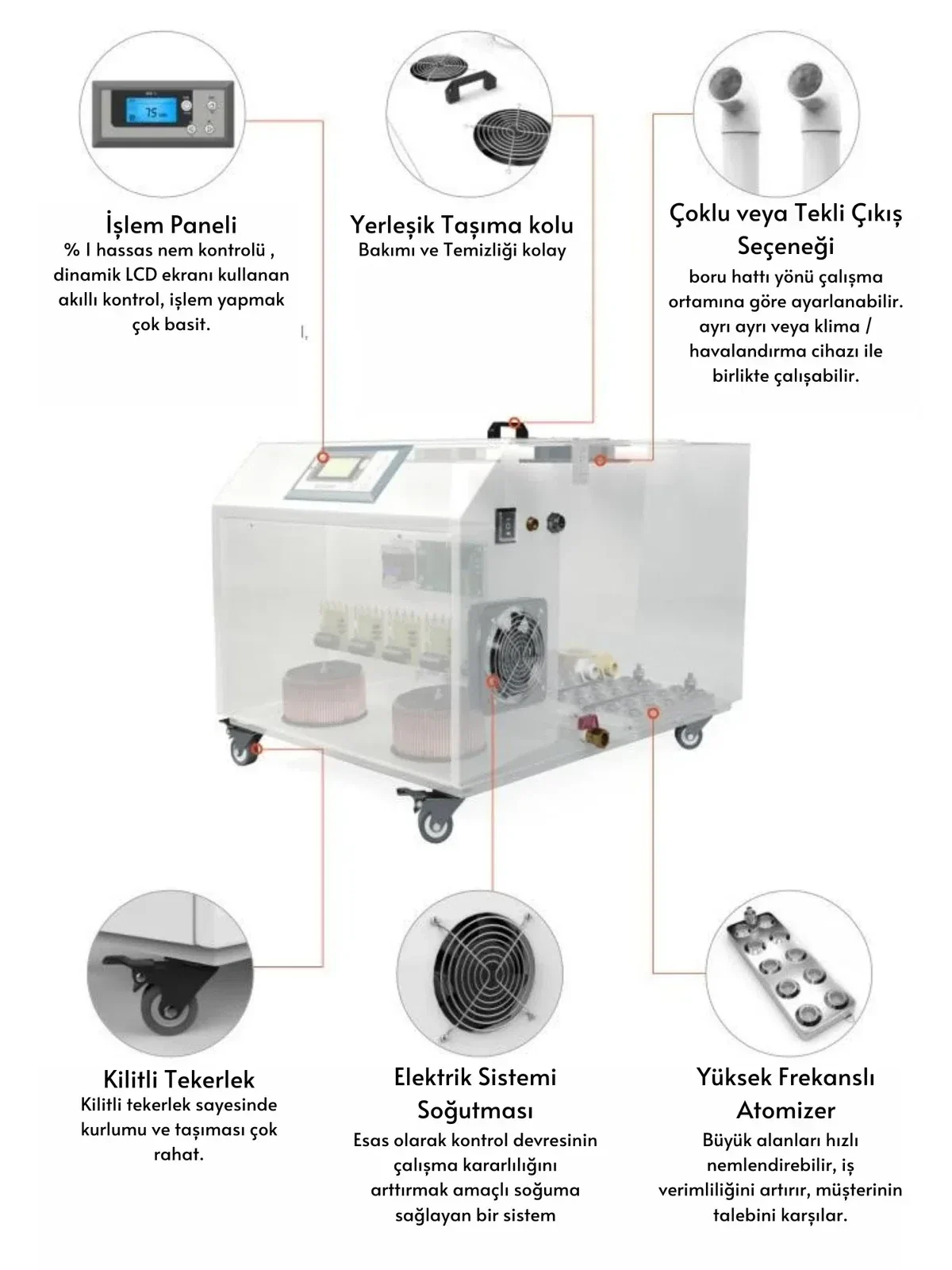
Ultrasonic atomizer modules split water into micro particles through high-frequency vibration. Fan and outlet ducts carry this fine mist into the room. This allows the target relative humidity level to be planned in a controlled way without a high-pressure line.
Target humidity, operating range and usage scenario can be managed from the panel.
The distribution direction can be adapted to the room layout and duct route.
Cleaning, maintenance and in-facility positioning become more practical.
The unit is easy to move and can remain fixed during operation.
For the best result, capacity should be calculated together with room volume, air exchange, target relative humidity, water quality and operating time.
This product group is used in enclosed areas where sensitive humidity ranges support product quality, process stability and working comfort.
Humidity sensor and automation support help keep the target range more stable.
Micro mist distribution helps reduce heavy wetting and supports balanced room humidity.
The ultrasonic operating principle provides quiet and economical humidification in many applications.
Wheeled body and outlet direction make it possible to use the device at different points.
Filter, water tank, fan and atomizer access are considered for periodic maintenance.
The device is selected according to textile, printing, greenhouse, warehouse and production requirements.
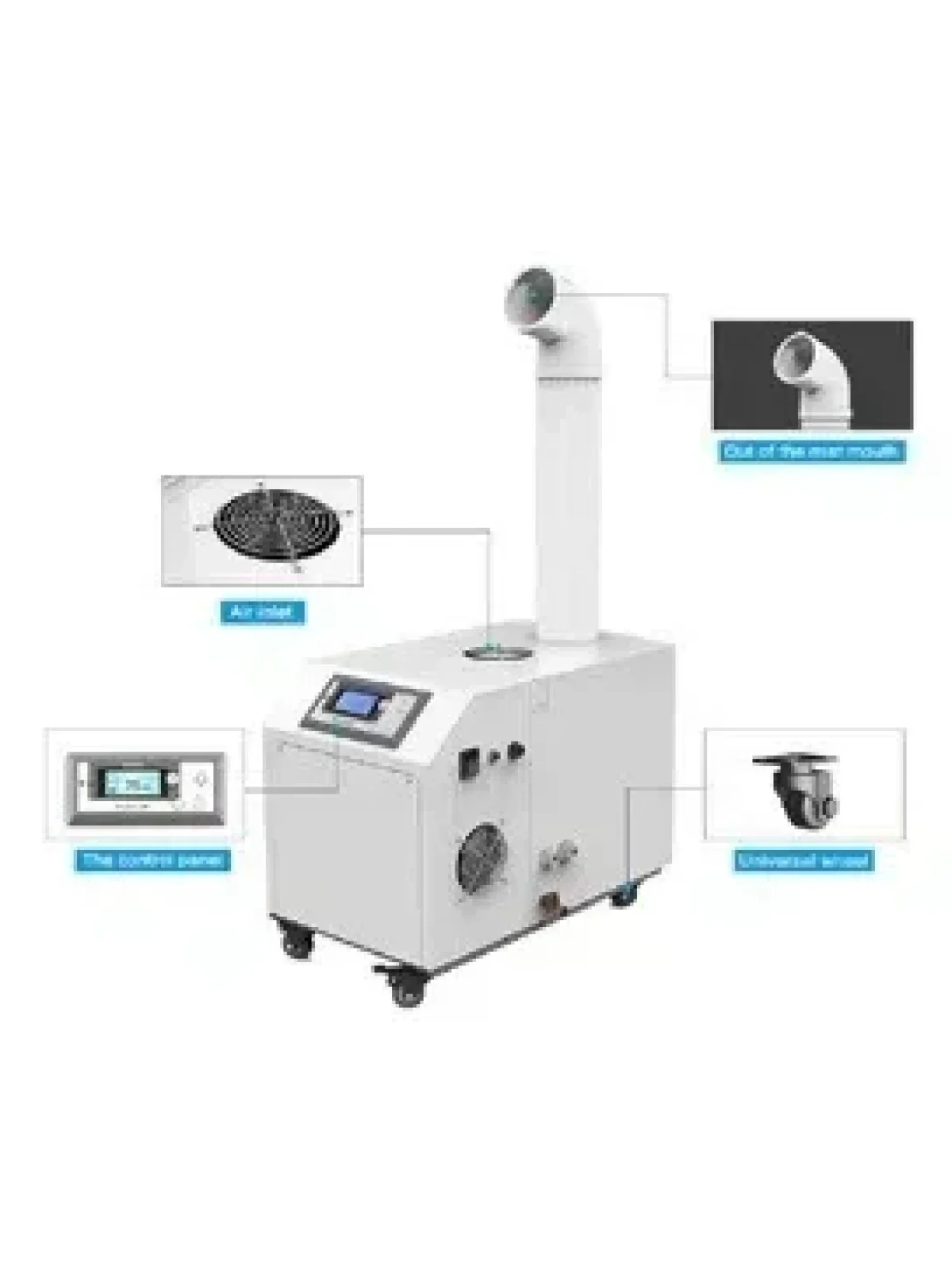
The LCD panel helps follow target humidity and operating settings.
The core component that converts water into micro mist particles.
Supports stable operation of the control circuit.
The humidification direction is positioned according to airflow and room layout.
Water quality is critical for atomizer lifetime and maintenance intervals.
Device quantity is not selected by square meter alone. Volume, air exchange, door opening frequency and target humidity range are all evaluated together.
Helps reduce static electricity, fiber breakage and quality loss.
Supports process stability by balancing paper deformation and drying issues.
Supports plant development and controlled climate conditions.
Considered for reducing product moisture loss and protecting room quality.
Provides homogeneous distribution in high-humidity production areas.
Helps create humidity balance to reduce static electricity in sensitive processes.
Controlled humidity supports product, packaging and working environment quality.
Supports target humidity ranges in test rooms and controlled spaces.
The video section enriches the page with a visual reference for the device body, outlet structure, mist generation and field-use scenario.
Images explain carrying, outlet, control-panel and technical components with descriptive alt text for search engines and AI indexes.
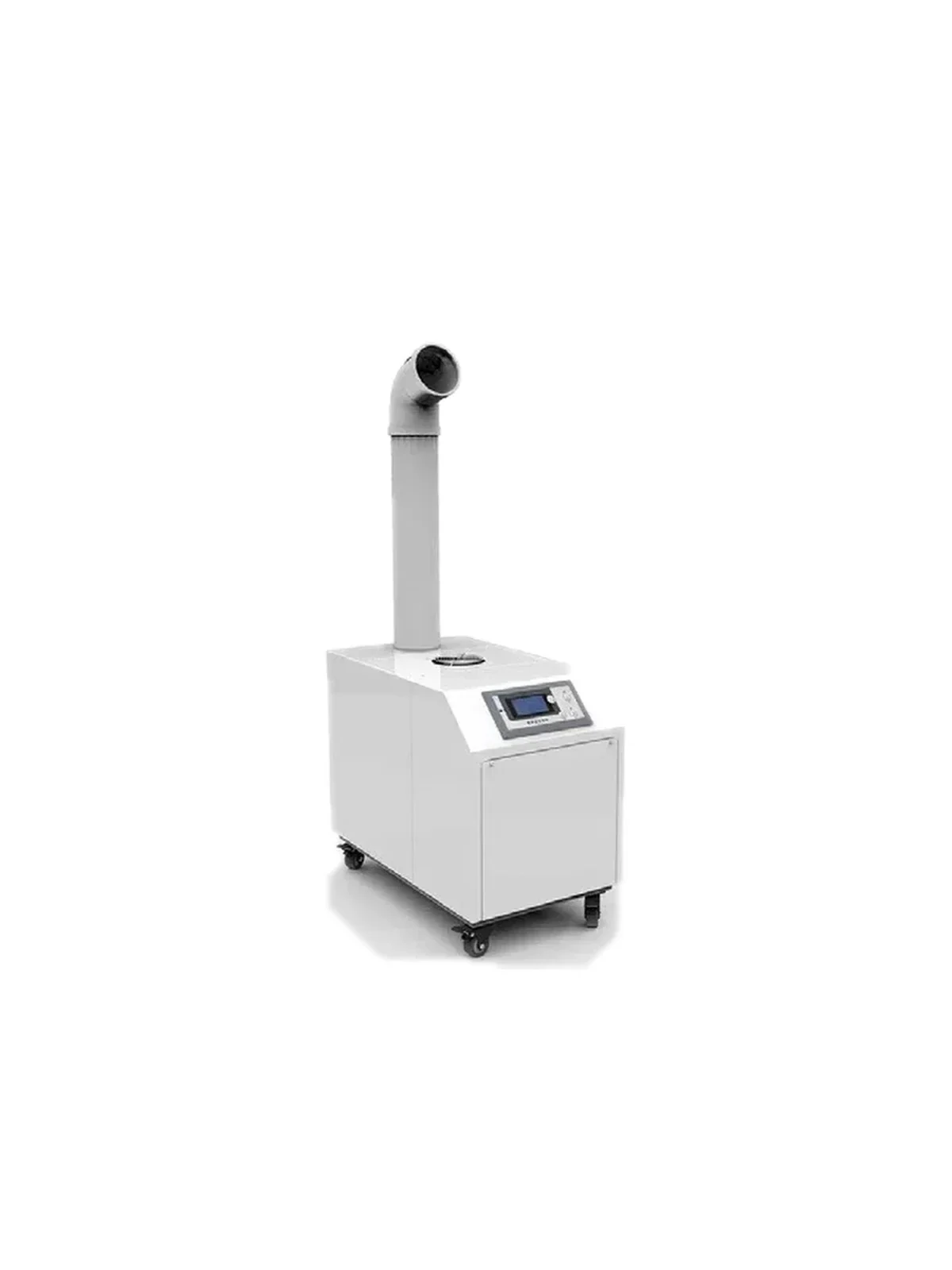
Ultrasonic humidification is not applied with the same capacity in every project. Room volume, air exchange and water quality define the technical selection.
It is used in enclosed areas such as textile, yarn, printing, greenhouse, mushroom production, cold storage, electronics, food and laboratory environments that need stable humidity balance.
Single outlet devices are suitable for directed distribution, while dual outlet devices distribute mist in two directions for larger volumes. Final selection depends on the room layout.
Water quality and filtration are critical for efficient atomizer operation and for reducing scale and mineral build-up.
Area size, ceiling height, target relative humidity, operating time, ventilation status and available water-electrical infrastructure are enough for the first quotation step.
Share your area information; we will plan device quantity, placement, outlet direction, water quality and automation requirements together.